
⏱️ Estimated reading time: 5 minutes
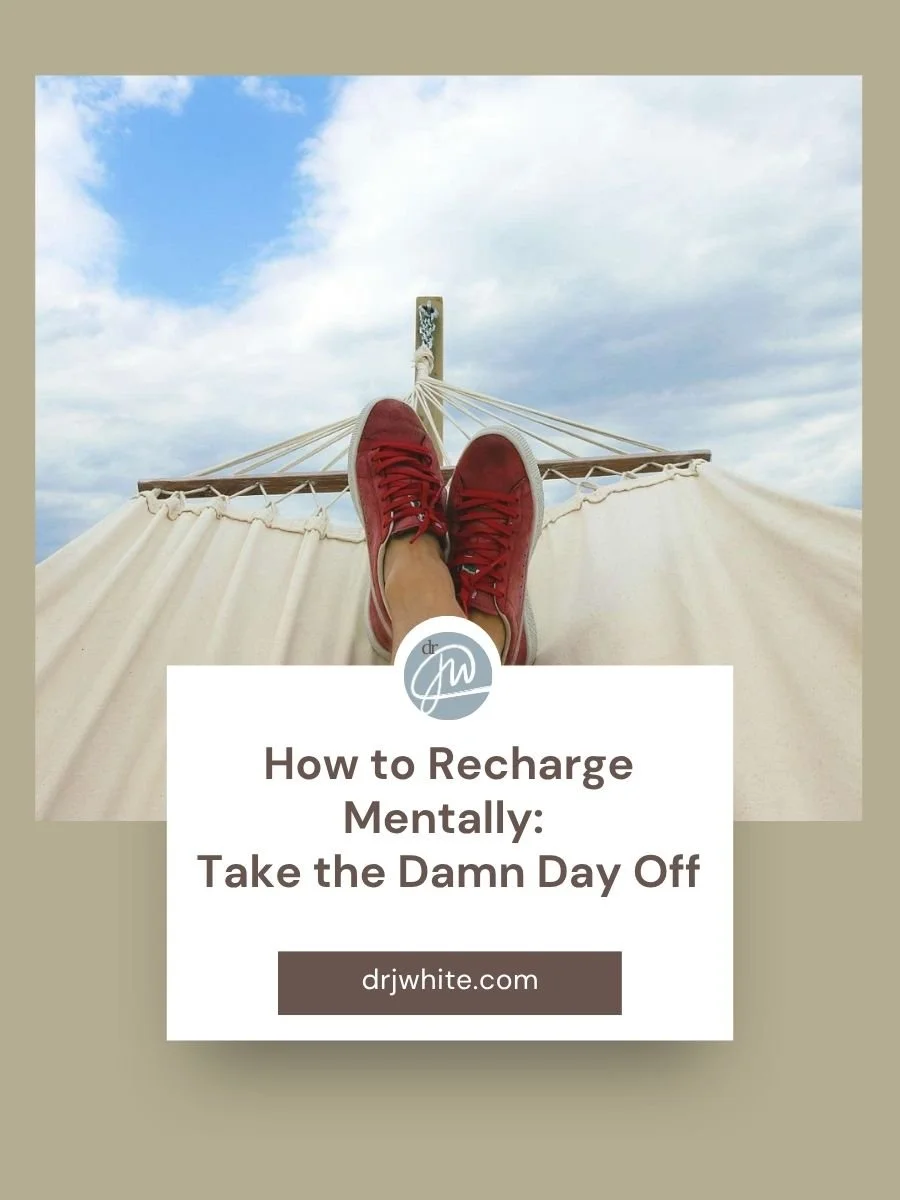
TL;DR: Rest is 100% a necessity, not a reward that needs to be earned. Don’t let perfectionism or guilt burn you out. Take the damn day off. Learn how to mentally recharge so you can be present for the things that matter most to you.
Should you take the day off? The answer is YES.
Do you find it hard to give yourself permission to take time off work? If so, you’re not alone. I know many people who struggle with this, and I’ve been there myself.
If you live with high-functioning anxiety, perfectionism, or people-pleasing tendencies, setting boundaries, especially when it comes to self-care, can feel almost impossible.
Meet Dr. Jenny
Before we get into it, I’m Dr. Jenny White, a licensed clinical psychologist who helps high-achievers, perfectionists, and people-pleasers reduce anxiety, build healthier boundaries, and find balance without guilt. Through online therapy, I help clients reconnect with themselves so rest feels productive instead of indulgent.
DISCLAIMER: I am a licensed clinical psychologist, and the information provided here is for general informational and educational purposes only. While I aim to share helpful and thoughtful content, reading this blog does not establish or imply a therapist-client relationship between us.
If you are experiencing a mental health crisis, please seek immediate help from a licensed professional or contact emergency services in your area. This blog should not be a substitute for professional mental health care or personalized guidance.
For personalized support or therapy services, please reach out directly to a licensed mental health provider in your area.
Table of Contents
- Why High-Achievers Struggle to Rest
- The Link Between Self-Worth and Productivity
- When to Take Personal Time (and Why It Matters)
- How to Rest Without Guilt: Reframing Self-Care
- The Benefits of Taking Time Off for Mental Health
- You Don’t Have to Earn Your Rest
- How Therapy Can Help You Break the Hustle Cycle
Now, back to convincing you to take that day off…
Why High-Achievers Struggle to Rest

It’s hard to slow down or say no to that next request. You want others to see you as hardworking and dedicated (even if, deep down, you don’t feel like you’re operating at 100%). The fear is that if you’re not “fully on” at work or in relationships, someone will notice and something bad will happen: missing a promotion, being left out of an important meeting, sparking conflict, or even losing a friendship.
The Link Between Self-Worth and Productivity
But here’s what I see over and over: people who push themselves to avoid the discomfort of failure or conflict often overcorrect. They end up giving far more than is necessary, leaving plenty of room to scale back in healthy ways. Especially when it’s in service of a boundary or true self-care. And let’s be clear: boundaries and self-care are not mean or selfish.
When to Take Personal Time (and Why It Matters)
So what’s the takeaway?
Take the damn day off.
Too often, I see people refusing to take time off work, even when they’re sick. They negotiate with themselves, doing mental gymnastics to avoid using a vacation or sick day. When they finally do take time off, usually because they’re too ill to function or a loved one insists, they feel guilty or anxious.
Let me be clear:
You do not need to be on your deathbed to take a sick day.
You do not need to justify using your vacation or personal days.
How to Rest Without Guilt: Reframing Self-Care
In American culture, we tend to undervalue rest and self-care. Hustle is treated like a badge of honor; busyness is the brag. That mindset makes it even harder to step back, because we fear judgment from others.
📖You can read more about my tips for dealing with “hustle culture” in this blog post: Do Less: Avoid the Trap of Hustle Culture
And yes, sometimes judgment will happen. A boss might be annoyed. A friend or family member might make a comment. But here’s the thing: that’s their stuff, their fears, their values, their lens, it doesn’t have to be yours.
So allow others to own their stuff, and you can own yours. You’re not doing anything wrong by taking care of yourself.
The Benefits of Taking Time Off for Mental Health

I’d love to see us start bragging about rest. Be proud that you’re protecting your energy so you can do your best work when it matters most.
If you’re sick and you take time to rest, you’ll likely recover faster. If you push through, you might prolong your illness, trading one or two days of rest for weeks of fatigue and brain fog.
And those vacation days? Take them.
Use them to try something new or revisit something you already love. Give your brain or body a break, shake up the routine, and reconnect with yourself or the people who matter most.
You deserve it.
And when you take your day off, remember to truly disconnect. Here are a few more posts to help you set those boundaries and why it’s important:
📖 Setting Boundaries with Work Email
📖 Managing Work Stress: Understanding How Stress Impacts You and What You Can Do About It
You Don’t Have to Earn Your Rest
I’ll say it again. You don’t have to earn your rest. It is not a reward, it is a necessity. If perfectionism, guilt, or doubt are holding you back from taking care of yourself in the ways you know deep down you need, reach out. I love helping people learn to untangle their doubts and honor their needs.
How Therapy Can Help You Break the Hustle Cycle
Therapy can help you explore where these patterns come from and build confidence around rest, boundaries, and self-worth. You don’t have to push yourself to the point of burnout to feel valuable. If you’re ready to stop equating rest with guilt and start living with more balance, I’d love to help.